Azerbaijan's Growing Role in the European Political Area and Active Dialogue Diplomacy: From Dublin to Baku
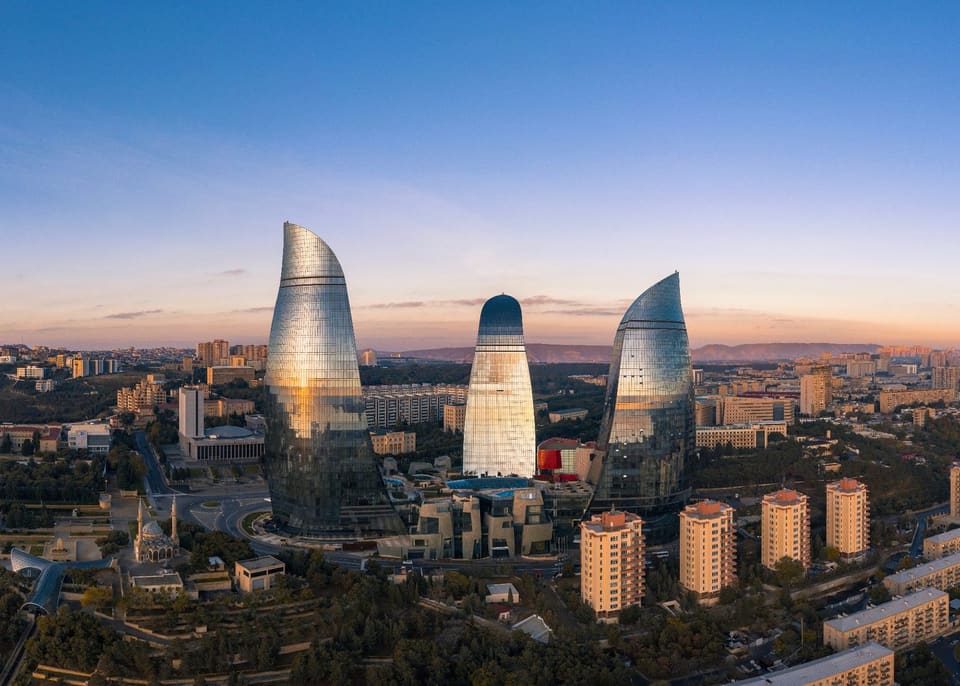
The European Political Community (EPC) Dublin Summit is of significant importance for discussing Azerbaijan's political dialogue with European countries, partnerships in energy and transport, as well as regional peace initiatives. Baku hosting the platform's next summit in 2028 highlights the country's growing role in multilateral diplomacy and its capability to build active dialogue across diverse geopolitical spaces.
Operativ Media reports, citing AZERTAC, offering a brief review of the Dublin summit agenda, Azerbaijan's partnership with Europe, and the significance of the Summit to be held in Baku in 2028.
The 9th EPC Summit, to be held on November 12 in the Irish capital of Dublin, will bring together heads of state and government from across the European continent to discuss shared political and strategic issues. Dedicated to the topic "Europe - strong, secure, and connected," this year's summit agenda includes building a competitive economy, promoting innovation, developing transport connections, accessible energy, as well as the security and defense of a democratic Europe. Nearly 50 heads of state and government are expected to participate, making it an important platform for discussing challenges facing European nations on a broad geographic scale and continuing political dialogue on common interests.
For Azerbaijan, the significance of the Dublin Summit extends beyond its agenda. The country has actively participated in previous EPC meetings, advancing its stance on regional security, energy, and connectivity. The decision to hold the Summit in Azerbaijan in 2028 adds a new perspective to this cooperation.
What is the European Political Community and why is Azerbaijan participating in this platform?
Established in Prague in October 2022, the European Political Community is an informal intergovernmental dialogue platform uniting EU and non-EU countries around common political and strategic issues. Its primary goal is to expand political consultations, foster cooperation on shared challenges, and contribute to the security, stability, and prosperity of the European continent.
The defining feature of the EPC is its informal and consultative nature. The platform allows heads of state and government to discuss issues of mutual interest outside the confines of formal institutional procedures. The effectiveness of this format lies not in creating new decision-making structures, but in enhancing political dialogue and mutual understanding among existing international mechanisms.
This aspect is particularly important in Azerbaijan's approach to the EPC. The country supports open political dialogue and mutual consultation within Europe. At the same time, it maintains that there is no need to transform the platform into a new international organization or create additional institutional structures. This approach aligns with a crucial principle regarding the original objectives of the EPC. The strength of the platform lies in its flexibility, broad representation, and ability to bring countries with diverse political stances together in a single forum. Given the existence of various international organizations operating across different fields in Europe, effectively utilizing existing formats takes precedence over creating new institutional mechanisms.
Since the first Summit in Prague, the platform's agenda has encompassed energy security, economic cooperation, migration, transport, innovation, and defense. The interconnection of these directions is clearly reflected in the Dublin Summit's agenda. Thus, the main function of the EPC is to maintain political consultations on complex challenges facing Europe and create additional opportunities for dialogue between states. Azerbaijan's participation in this platform is an integral part of such an approach. For the country, the EPC is valuable both for presenting national interests at the level of European leaders and for fostering direct contacts with partners on regional and global issues.
Azerbaijan's place on the European agenda: Energy, connectivity, and reliable partnership
It is no coincidence that building a competitive Europe is one of the main discussion topics at the Dublin Summit. In modern times, economic competitiveness depends not only on technological innovation, but also on reliable energy supplies, transport infrastructure efficiency, and supply chain resilience. The growing interest of European countries in Azerbaijan in recent years is linked to President Ilham Aliyev's high personal standing, the strengthening of the country's position in the international relations system, and its expanding role in addressing regional and global issues. This interest is demonstrated by visits of heads of state and government and high-ranking EU officials to Azerbaijan, their meetings with President Ilham Aliyev, and new cooperation initiatives.
A notable aspect is that several bilateral meetings conducted by President Ilham Aliyev on international platforms were organized at the request of the counterparty. Meetings held in Davos, Munich, and other platforms under such circumstances highlight the head of state's personal prestige, the country's growing influence, and its key role as a reliable partner for dialogue.
Visits by high-ranking EU officials to Azerbaijan also reflect the dynamics of these relations. In 2025, EU High Representative Kaja Kallas and Commissioner for Enlargement Marta Kos met with President Ilham Aliyev in Baku. In March 2026, President of the European Council António Costa and European Commissioner for Energy and Housing Dan Jørgensen visited Azerbaijan for talks with the head of state. All these developments underscore Azerbaijan's strategic importance to Europe.
Azerbaijan's strategic significance for Europe is primarily tied to energy security. In 2022, President Ilham Aliyev and European Commission President Ursula von der Leyen signed a Memorandum of Understanding on Strategic Partnership in the Field of Energy. Natural gas supplies to Europe via the Southern Gas Corridor have expanded. Today, Azerbaijan exports gas to 16 countries, including 10 EU member states, and this geography continues to broaden.
There are also extensive opportunities for cooperation in green energy. The Caspian Sea's wind power potential, solar energy projects, green energy corridors with Central Asia, and the subsea electric cable across the Black Sea serve to expand connections with European markets. The participation of representatives from 27 partner governments and 60 international organizations and companies at the 12th Southern Gas Corridor Advisory Council and 4th Green Energy Advisory Council Ministerial Meetings in Baku in March 2026 highlights Azerbaijan's role as an international cooperation platform in this field.
In transport and logistics, the Middle Corridor, East-West, and North-South routes elevate Azerbaijan's role as a major transit hub between Europe and Asia. The development of the Baku International Sea Trade Port, railway infrastructure, and cooperation on the Nakhchivan railway connection are vital for expanding cargo flows between Europe and Central Asia. Furthermore, the mobilization of over 130 million euros in investments in Azerbaijan under the EU's "Global Gateway" initiative represents a concrete result of this economic partnership.
Thus, European interest in Azerbaijan is not limited to individual diplomatic meetings. Energy security, the green transition, transport connectivity, investments, and regional stability form the core of this interest. High-level meetings held at the initiative of European partners, visits by official European figures to Baku, and joint projects demonstrate Azerbaijan's expanding role as a reliable and strategically vital partner for Europe.
Middle Corridor: A strategic route connecting Europe and Asia
The inclusion of connectivity enhancement on the Dublin Summit's agenda is equally noteworthy from the perspective of Azerbaijan's transport and logistics potential. Against the backdrop of shifting global trade routes and the growing necessity for supply chain resilience, developing alternative transport corridors has become a key economic and strategic priority for states. Azerbaijan's geographical location, Caspian port infrastructure, and railway and highway networks offer major opportunities for developing transit links between Europe and Asia. The Middle Corridor holds special significance in realizing these opportunities.
Extending from China and Central Asia through the Caspian Sea, Azerbaijan, and the South Caucasus to Türkiye and Europe, this route serves to diversify international freight transportation. Fully realizing its potential requires not only expanding infrastructure, but also simplifying border crossing procedures, digitizing customs systems, establishing competitive tariffs, and enhancing interoperability between different transport systems. Projects implemented by Azerbaijan in this direction expand the country's role in regional economic ties. The development of transport links also creates opportunities for deepening trade, investment, and economic cooperation between Europe and Central Asia. The convergence of energy and transport factors establishes a foundation for long-term strategic cooperation between Azerbaijan and Europe. The Dublin agenda underscores that energy security and connectivity development cannot be viewed in isolation when striving to enhance European competitiveness.
New opportunities for peace in the South Caucasus
Security issues occupy a prominent place on the European Political Community's agenda. The ongoing Russia-Ukraine war, hybrid and cyber threats, the protection of critical infrastructure, and the resilience of democratic institutions form common discussion topics for European states.
For Azerbaijan, a key security priority is ensuring lasting peace and regional cooperation in the South Caucasus. Strengthening stability in the region impacts not only political relations, but also trade links, transport route developments, and the investment climate.
President Ilham Aliyev's address via video link at the EPC Yerevan Summit in May 2026 carries special significance in this context. While noting the acceptance of Azerbaijan's initiative to host a future summit, the head of state highlighted progress achieved in Azerbaijan-Armenia relations and stressed the importance of peace. The normalization process between Azerbaijan and Armenia is vital for generating new cooperation opportunities in the South Caucasus. However, consolidating sustainable peace requires consistent implementation of agreed terms, strengthening mutual trust, and expanding practical cooperation. The success of this process could positively influence the region's integration into international transport and economic networks. Strengthening peace in the South Caucasus can create favorable conditions for developing connections between Europe and Asia, expanding regional trade, and implementing new economic projects.
For Azerbaijan, regional peace is not limited to political normalization alone. It is equally essential for realizing the country's strategic priorities in transport, energy, and economic cooperation.
From Dublin to Baku: The political significance of the 2028 Summit
Azerbaijan hosting the European Political Community Summit in 2028 marks an important milestone in its multilateral diplomacy. Speaking at the 8th Summit in Yerevan on May 4, 2026, President Ilham Aliyev announced that Azerbaijan's candidacy had been accepted and that the country would host EPC participants in May 2028. The head of state's address was a key political event defining Azerbaijan's future role in the EPC's activities. Hosting the summit offers Azerbaijan not only the opportunity to organize a major international event, but also a platform to advance political dialogue with European nations. The Baku summit will bring together heads of state and government, as well as leaders of European institutions, fostering conditions to discuss common political issues, expand bilateral contacts, and outline new areas of cooperation.
In this regard, the Dublin Summit serves as an important preparatory stage for Azerbaijan. As the 2028 host, the country gains the opportunity to closely follow the platform's agenda, discussion mechanisms, and shared priorities of participants. This experience will contribute to an organizationally and politically effective gathering in the future. Moreover, hosting the Summit in Baku elevates the importance of broader political dialogue alongside energy and transport matters in Azerbaijan-Europe relations. This format creates new avenues for the country to foster communication among states holding differing positions, identify common interests, and develop practical cooperation.
Azerbaijan: A dialogue bridge between different political spaces
Azerbaijan's international agenda extends beyond its relations with Europe. Developing ties with Central Asia, the CIS region, and the Islamic world represents other crucial foreign policy directions. In recent years, expanding the institutional framework of cooperation in these regions, assuming leadership positions in international organizations, and hosting major events have broadened the scope of Azerbaijan's diplomatic activity.
Another example of this was Baku hosting the 7th Summit of the Conference on Interaction and Confidence Building Measures in Asia (CICA) on October 15, 2026. The extension of Azerbaijan's chairmanship of the organization until 2028 with member state support reflects the country's contribution to dialogue and confidence-building in Asia. The significance of this chairmanship goes beyond political representation, opening additional avenues for expanding relations with Asian states in transport links, digitalization, economic cooperation, security, and sustainable development.
The upcoming period will also be marked by major events in relations with the Islamic world. Baku hosting the 16th Summit of the Organization of Islamic Cooperation (OIC) in 2027 and Azerbaijan's chairmanship of the organization will enable the country to contribute to political coordination, as well as economic and humanitarian cooperation among member states. This is significant for further expanding Azerbaijan's standing in the Islamic world and its participation in international initiatives.
The Central Asian region is occupying an increasingly prominent place in Azerbaijan's foreign policy. On November 16, 2025, at the 7th Consultative Meeting of Central Asian Heads of State in Tashkent, a decision was adopted for Azerbaijan to join the platform as a full participant. At the 8th meeting held on October 8, 2026, in Turkmenbashi, it was announced that Azerbaijan will chair the platform for the first time in 2027. These decisions create new prospects for expanding political, economic, and transport-logistics cooperation between Azerbaijan and Central Asian nations.
Under these circumstances, a broader diplomatic horizon opens up for Azerbaijan. The agreement to hold the 12th Summit of the European Political Community in Baku in 2028 serves as a clear indicator of the country's growing engagement in European political dialogue. Concurrently continuing the CICA chairmanship, leading the OIC, and hosting the EPC Summit during the same period expands Azerbaijan's capacity to harmonize its relations with diverse geopolitical centers within a unified diplomatic framework. In this context, the prospect of Baku becoming recognized as a "new Vienna" or "new Geneva" for international dialogue and mediation is particularly noteworthy.
This is precisely where the Dublin Summit agenda intersects with Azerbaijan's international activities. Europe's priorities regarding security, energy supply, economic competitiveness, and transport connectivity align in many respects with key directions of Azerbaijan's foreign policy. The Southern Gas Corridor, the Middle Corridor, connections across the Caspian, and ensuring sustainable peace in the South Caucasus form both the economic and geopolitical foundations of cooperation with Europe. The EPC Summit to be held in Baku will facilitate elevating this dialogue to a broader political platform.
In fact, the defining feature of Azerbaijan's diplomatic agenda in the coming years will be the unification of diverse geographic directions into a single strategic line. Energy and transport partnerships with Europe, strengthening trust and connectivity with Asia, political coordination with the Islamic world, and economic integration with Central Asia complement the country's role in the international relations system from multiple angles. This political trajectory stretching from Dublin to Baku reflects Azerbaijan's aspiration not merely to participate in regional processes, but to serve as a key partner contributing to dialogue and cooperation across diverse geopolitical spaces.