Trilateral meeting of Azerbaijani, Turkish and Georgian customs services held in Goygol
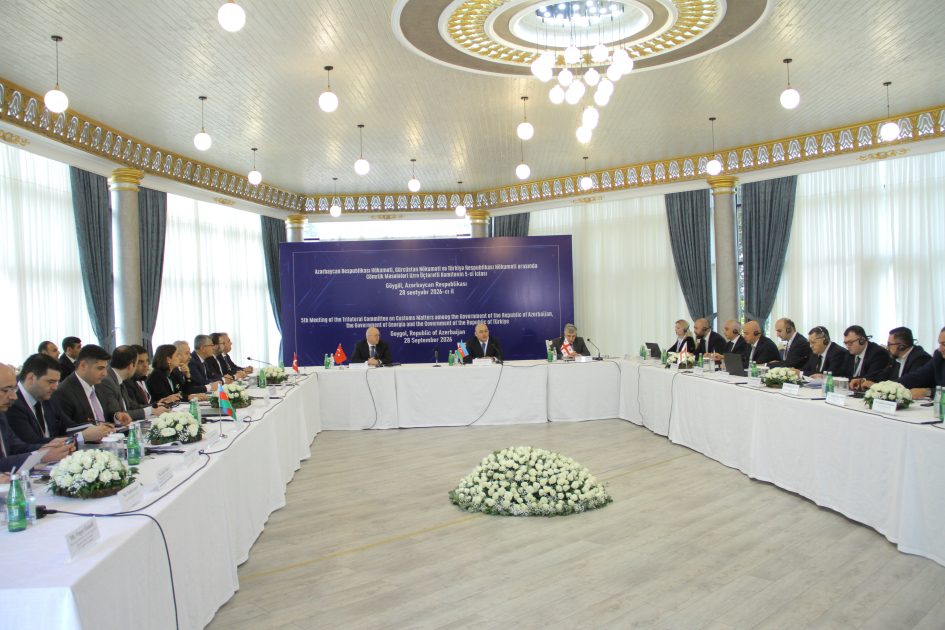
The 5th meeting of the Trilateral Committee on Customs Matters between the governments of Azerbaijan, Georgia and Turkey has been held in the Goygol district.
Operativ Media reports, citing AZERTAC, that the meeting, attended by delegations led by Shahin Baghirov, Chairman of the State Customs Committee of Azerbaijan, Sezai Uçarmak, Deputy Minister of Trade of Turkey, and Mamuka Baratashvili, Head of the Revenue Service and Deputy Minister of Finance of Georgia, discussed the current state and development prospects of cooperation between the customs services of the three countries.
During the meeting, the implementation status of agreements reached in previous meetings was reviewed, and measures to be taken in the next phase were determined. The main topics of discussion included optimizing customs procedures along the Middle Corridor, accelerating transit operations, expanding electronic data exchange, and increasing the efficiency of border crossing processes.
Views were exchanged on facilitating transit operations within the framework of the Baku-Tbilisi-Kars railway project, risk management, improving preliminary electronic data exchange, and strengthening cooperation in the fight against customs offenses.
At the end of the meeting, a protocol reflecting the agreements reached was signed.
Within the framework of the event, the 6th meeting of the Joint Committee on Customs Matters between the State Customs Committee of Azerbaijan and the Ministry of Trade of Turkey was also held.
The meeting discussed the implementation of the New Computerised Transit System (NCTS), simplification of customs procedures, development of TIR and e-TIR mechanisms, acceleration of border crossing processes, and increasing the throughput capacity of cargo vehicles. The parties also exchanged views on expanding information exchange in various areas of customs work, combating customs offenses, authorized economic operators, mirror customs statistics, and studying best practices in risk management, as well as reviewing opportunities for joint operations and training.
At the end of the meeting, a protocol reflecting the discussed issues and agreements reached was signed.