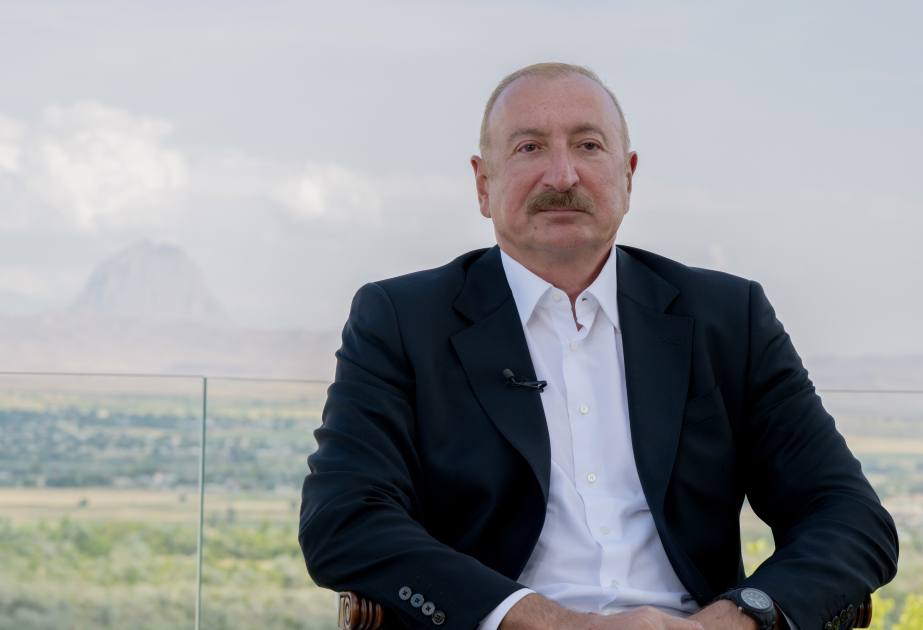
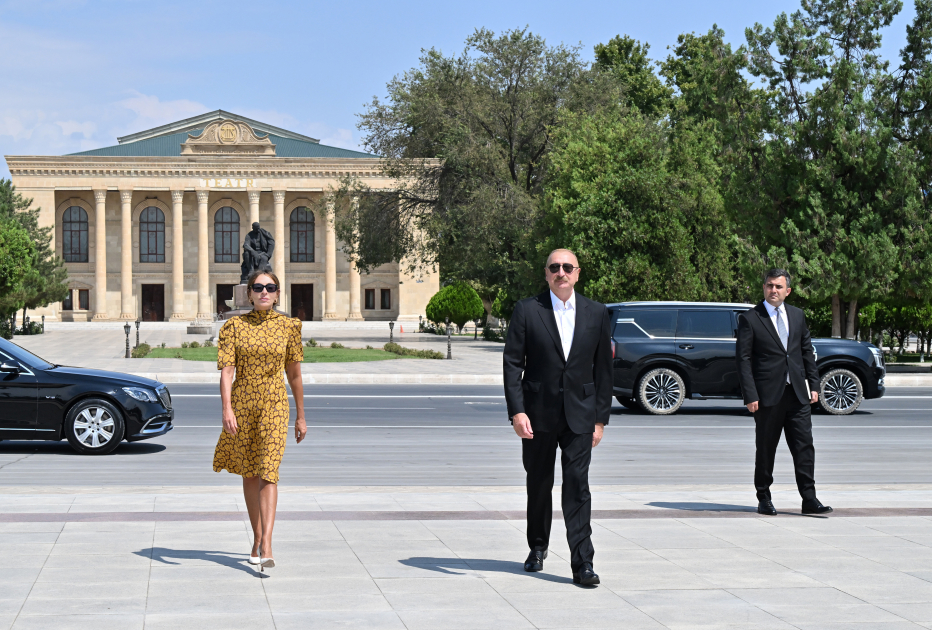
President Ilham Aliyev gives interview to Azerbaijan Television
Operativ Media
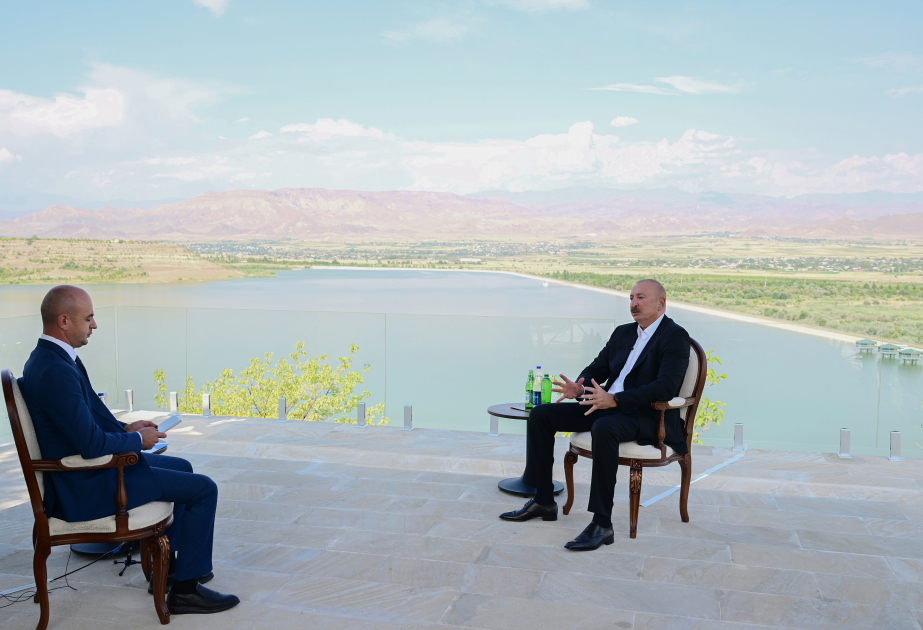
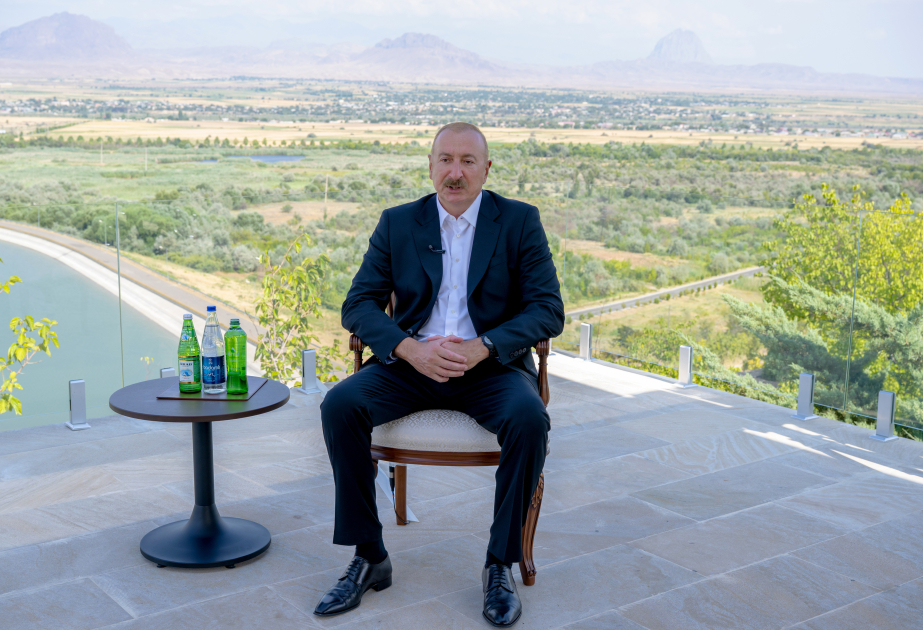
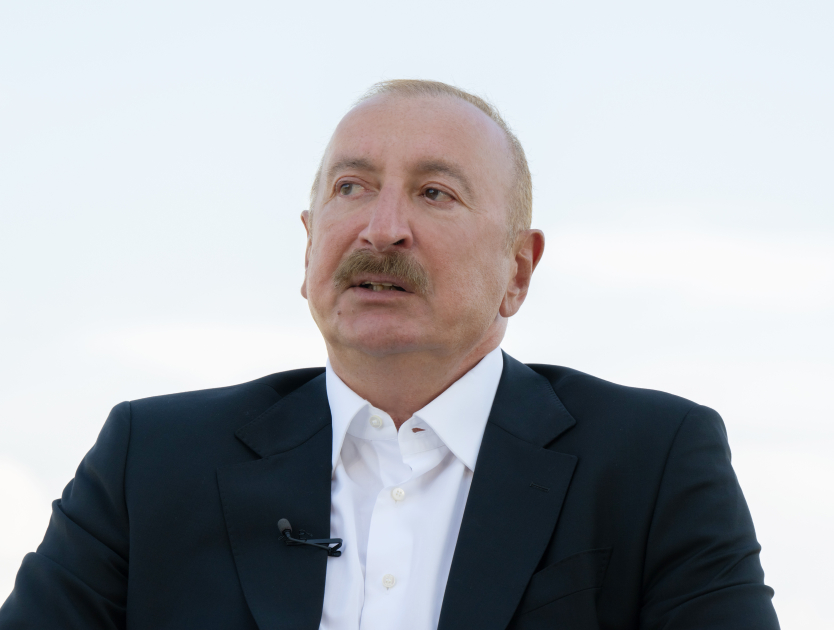
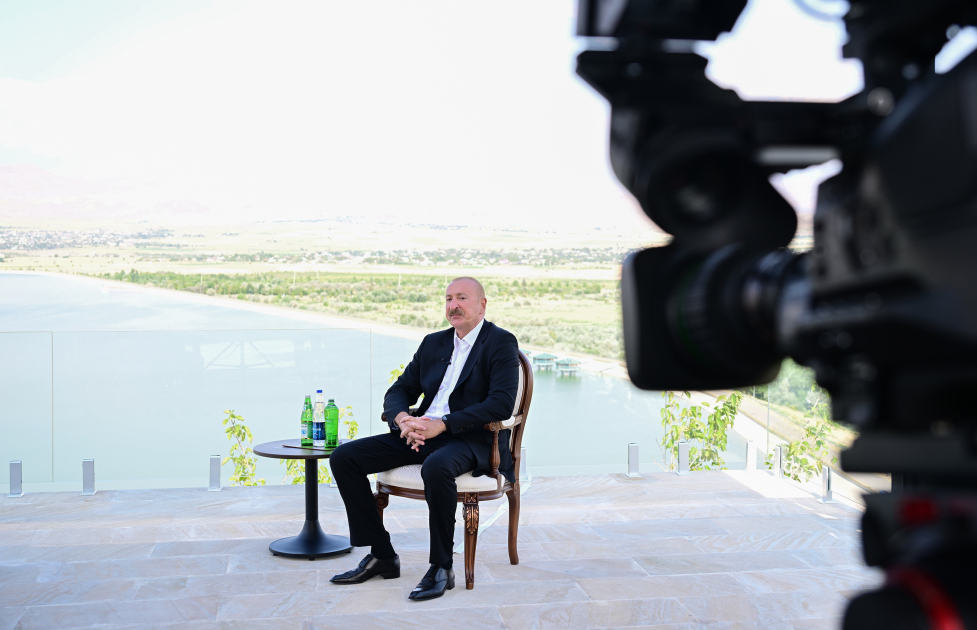
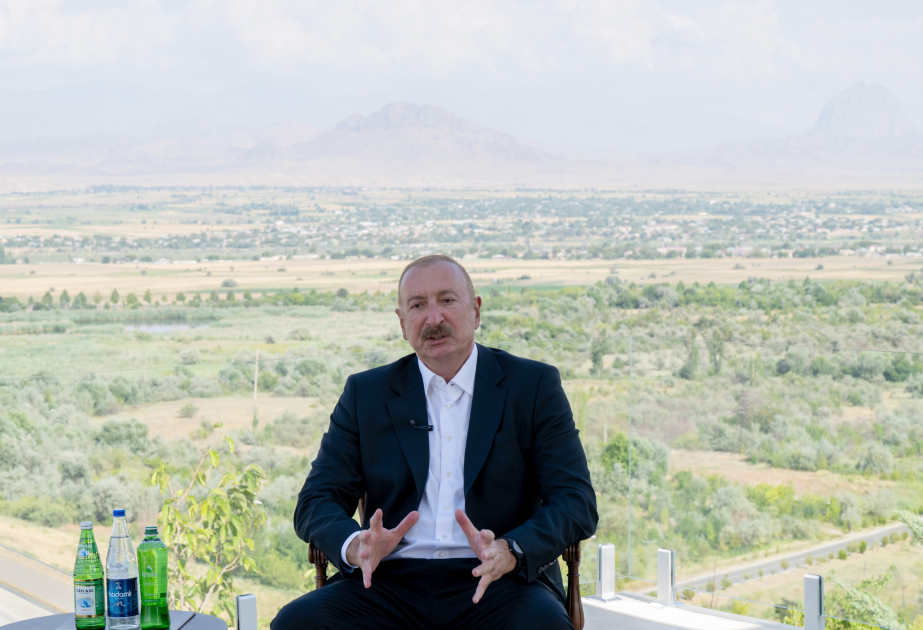
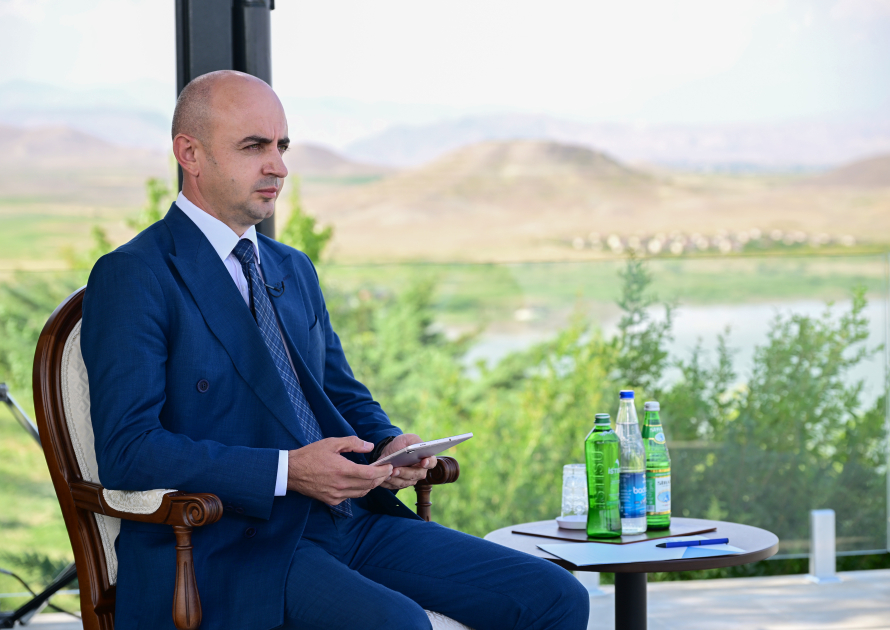
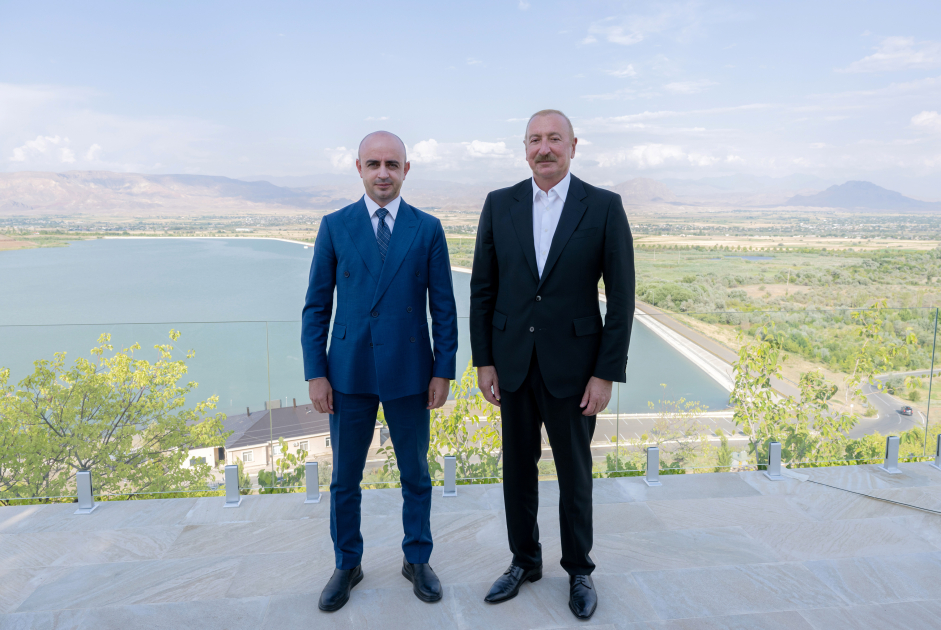
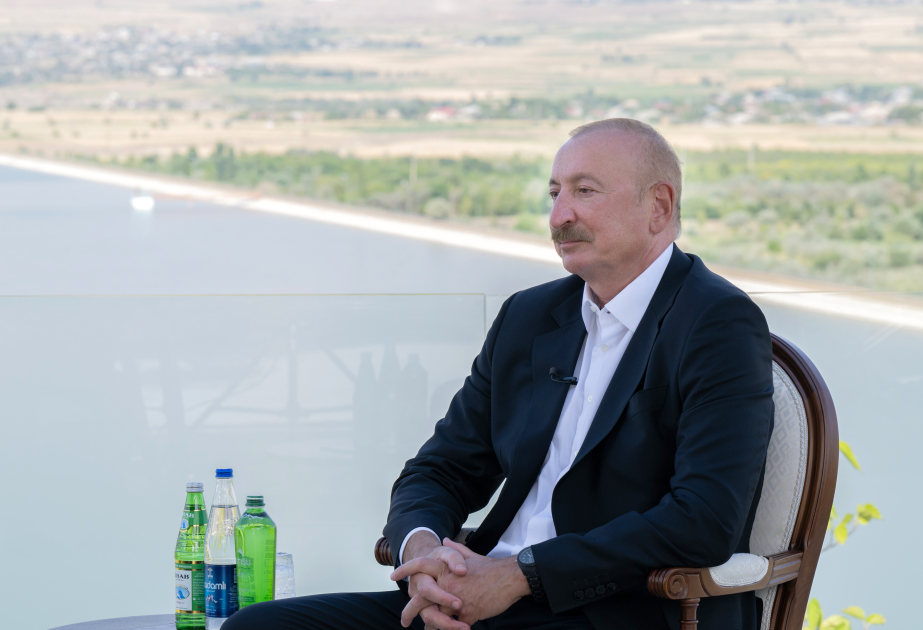
President Ilham Aliyev has given an interview to Azerbaijan Television.
Operativ Media presents the interview:
Journalist: Welcome, Mr. President. First, I would like to thank you for taking the time for this interview despite your busy schedule. With your permission, we would like to proceed with the questions.
President Ilham Aliyev: Please, go ahead.
Journalist: This is your 17th visit to Nakhchivan, and during this trip we witnessed extremely important events. Overall, how would you evaluate the details, outcomes, and results of this visit?
President Ilham Aliyev: In fact, my visit and the events I attended during it are indicators in themselves. They demonstrate once again that the Nakhchivan Autonomous Republic is developing comprehensively. As you mentioned, this is my 17th visit to Nakhchivan as President, and each of my visits carries great significance and produces excellent results.
Over these years, many important projects have been implemented, ensuring the overall development of Nakhchivan. Today's events are a continuation of the work done, and naturally, the necessary decisions will continue to be made to ensure the rapid socio-economic development of Nakhchivan.
During these years, strengthening Nakhchivan's defense potential was naturally among the top priorities. Great work was done in this direction, and today, during the flag presentation ceremony, Nakhchivan's military strength demonstrated itself once again — both in terms of modern hardware supply and the creation of new commando forces. This reflects the broader picture observed in the Armed Forces of Azerbaijan recently.
As you know, the Separate Combined Arms Army was created in Nakhchivan by my decree. This army is naturally an integral part of the Armed Forces of Azerbaijan. However, Nakhchivan's specifics, its geography, and its lack of a direct geographic connection with the main part of Azerbaijan have led us to pay greater attention to the security of this region — the autonomous republic — and this will always be the case. Therefore, this is the primary condition. As I noted today, the Armed Forces of Azerbaijan have a decisive say in the region. Military potential in Nakhchivan is being strengthened day by day and will continue to be strengthened.
As for other events, I can particularly highlight the work done and to be done regarding job creation. Today, the foundation of the Nakhchivan Industrial Park was laid. Upon my instructions, many industrial parks have been established in Azerbaijan, and in terms of area, the Nakhchivan Industrial Park ranks second after the Sumgayit Chemical Industrial Park. As I said, the foundation stone was laid, and I am confident that practical work in this Industrial Park will begin soon.
At the same time, as part of this Park, a 300-megawatt thermal power plant will be constructed. I should mention that today Nakhchivan's generating capacity is approximately 200 megawatts. This single station will increase it 1.5 times. Naturally, this plant serves two purposes: first, to provide the Nakhchivan Autonomous Republic with sustainable power, and second, for export purposes.
If there are rare countries in our region today that have no issues with electricity, Azerbaijan ranks first among them. Because for various reasons, an energy crisis is being experienced in our region, and this crisis could deepen. The wars taking place in our region, growing risks, disruption of transport chains related to energy transport, and other factors — it cannot be ruled out that new unpleasant developments may occur in the future. Therefore, Azerbaijan's special role here is undeniable. We must ensure that Nakhchivan's continuous and sustainable energy supply is never interrupted.
For these purposes, back then, again on my initiative, we signed a gas swap agreement with the Islamic Republic of Iran. Under this agreement, a gas pipeline was built from Iran to Azerbaijan, and at the same time, gas delivery from Azerbaijan's Astara district to Iranian territory was secured. In other words, through swaps, we provided Nakhchivan with 100 percent gas coverage.
In parallel with this, we carried out gasification. For years now — I can say roughly 15 years, maybe even more — gasification in Nakhchivan has reached 100 percent. Overall gasification in Azerbaijan stands at 96 percent, which is a very high figure, but in Nakhchivan it is already 100 percent. This was also a step aimed at energy security.
A number of hydroelectric and solar power plants, as well as a modular power plant, have been built here. In other words, energy security is the second most important factor after physical security. Today, as I mentioned, the foundation for a 300-megawatt thermal power plant was laid, and I reviewed the construction of two 50-megawatt solar power plants.
The potential for solar energy in Nakhchivan is immense. Based on monitoring and precise analysis, Nakhchivan is the most favorable location in Azerbaijan for solar power generation. Therefore, an area of more than 600 hectares has already been designated, where solar power plants with a capacity of hundreds of megawatts will be constructed.
What is gratifying is that, as a rule, the private sector is involved in developing renewable energy sources in our country. The information presented to me today shows that these projects are economically attractive and profitable for investors.
That is to say, the positive investment climate in Azerbaijan, state support for renewable energy development, and our growing overall potential, including export opportunities, play an important role here. Because, as I mentioned, Nakhchivan is fully secured today in terms of electricity supply.
The 200-megawatt generation capacity I mentioned exceeds Nakhchivan's current demand. But we must look to the future. Nakhchivan's rapid development will continue, including as a result of the implementation of the State Program adopted by my decree. The export of large volumes of electricity from Nakhchivan will also be envisioned.
Another crucial area — which was also reflected in the program of my visit today — is the preservation of Nakhchivan's historical and cultural monuments. As you know, Nakhchivan possesses a rich history, culture, and architectural heritage. Nakhchivan was the capital of the ancient Atabegs state, and many monuments from that period and subsequent eras are of world significance.
The work done regarding the restoration of the Momine Khatun Mausoleum was presented to me today. At the same time, the conservation, preservation, and restoration of other historical and cultural sites are planned. A monument was erected in honor of the famous Nakhchivan architect Ajami Nakhchivani, the creator of the Momine Khatun Mausoleum. Behind that monument stands his immortal masterpiece, the Momine Khatun Mausoleum.
All these matters are of great importance. Because socio-economic development and energy security are, of course, vital, but underlying all this work is our national identity, our national spirit, our culture, language, literature, and history. The Azerbaijani people are a fortunate nation. We can be proud of our history, culture, and prominent figures.
Nakhchivan has also given many outstanding figures to Azerbaijan. Nakhchivan gave the Azerbaijani people a genius personality like National Leader Heydar Aliyev. In short, the rich history of this region, the courage of the people living here, their attachment to their homeland, as well as Nakhchivan's strategic location, opportunities, and ongoing and future projects carry immense significance not only for Azerbaijan — though primarily for Azerbaijan — but also for a broader geography.
For example, if we talk about transport corridors, today in the case of Nakhchivan we see new transport arteries. We are creating them. A lot of work has been done and will be done to achieve this. Therefore, close attention is paid to these issues and will continue to be paid.
Today, I can also note the opening of the DOST Center related to social security. Beside it stands the ASAN Service center, which was also established earlier on my instructions to provide better service to citizens.
In short, a glance at the program is enough for anyone to see that Nakhchivan's development is a reality. I can also add that in the State Program on agricultural development adopted recently — a few months ago — Nakhchivan holds a special place and allocation, with necessary funds provided. Crucial irrigation projects required for agricultural development are being implemented. Many artesian wells will be drilled, and modern irrigation systems installed. Water will be supplied to lands that are currently unirrigated. Thus, the development of the autonomous republic will be even faster and more comprehensive.
Journalist: Mr. President, this visit also takes place under new realities. The most important of these realities is probably related to the Zangezur Corridor, which you declared immediately after the war would definitely be opened, regardless of who wants it or not. What is the current status of the restoration and opening of Nakhchivan's railway and the Zangezur Corridor?
President Ilham Aliyev: The creation of the Zangezur Corridor was our initiative. Connecting the main part of Azerbaijan with its integral part, Nakhchivan, has been our long-standing dream. We were moving toward this goal with confidence and great skill, approaching it, and now we have arrived.
Naturally, you remember that following the end of the Second Karabakh War, a trilateral statement was signed by the President of Azerbaijan, the President of Russia, and the Prime Minister of Armenia. In fact, it was an act of capitulation for Armenia, because Armenia surrendered. At that time, the Aghdam, Kalbajar, and Lachin districts, which were still under occupation and had not yet been liberated by military means, were returned to us without a single shot fired. Naturally, Armenia did not do this voluntarily; we forced it to. When you force someone in a state of war, it means that party has suffered capitulation. There is no need to look for any humiliating or insulting meaning in this term; it is simply reality. We must know history as it is, we must not forget it, and we must never allow attempts to distort history. At that time — after the liberation of Shusha on November 9 — trilateral negotiations were ongoing through the mediation of the Russian President. I firmly insisted that the corridor connecting the main part of Azerbaijan with the Nakhchivan Autonomous Republic must be reflected in the signed statement. The Armenian side did not want to agree to this, but they did not have many alternatives. Had the war continued, we would have suffered losses, but Armenia would have suffered far greater losses, because their troops were practically surrounded and could have been completely destroyed. Therefore, even if they did not want to, Armenia agreed, and that statement is known to everyone; it contains a specific clause.
However, over the five years since the Second Karabakh War, no practical steps were taken toward opening the Zangezur Corridor. We repeatedly raised this issue with both Russia and Armenia, stating that time was passing, an important part of the statement was not being implemented, and this was an intolerable situation. At various times we received various answers, which I do not wish to elaborate on. The fact was that Armenia was trying to delay it in every way, while the Russian side was either unable to secure it or there were other reasons. The fact remained that until August of last year, the matter was frozen.
When the United States began approaching this issue — around the spring of last year, as a result of contacts initiated in early spring — this process was launched. Naturally, they were trying to contribute to the Armenia-Azerbaijan normalization process and expressed readiness to do so. Of course, we had several crucial conditions, including the Zangezur Corridor.
As a result, on August 8, 2025, at the historic Washington Summit, this issue was resolved. The implementation of this project, named TRIPP, has already started. Recently, three days ago, on August 8, during a conversation with President Trump, this issue was touched upon, and both sides reiterated their confidence that this vital transport project will definitely and swiftly be implemented. That is the background of the issue.
At the same time, immediately after the Second Karabakh War ended, we began restoring both railways and highways, including constructing roads leading toward Nakhchivan. Today, the Horadiz–Aghband highway is virtually ready, with only a few minor items remaining. Railway construction is also progressing rapidly. We could accelerate this project at any moment, but we see no need to do so as the Armenian section is not ready, allowing us to direct investments toward more urgent priorities.
Nevertheless, next year the railway will reach the border with Armenia. As for the construction of the Nakhchivan railway, work is currently underway. On my instructions, the Ministry of Transport is handling this. Azerbaijan Railways has begun construction work in the direction of Ordubad, and missing sections will be rebuilt. Two sections were missing, both close to the border with Armenia — one in Ordubad and the second in Sederek district. Both sections are quite short, roughly 3, 5, or 7 kilometers. The remainder of the railway is functionally operational and can be used today. However, the current capacity of the existing railway is 1.5 million tons. This is sufficient for the initial phase of launching the Zangezur Corridor and this branch of the East-West corridor overall. But our objective is for at least 15 million tons of cargo to transit through this transport corridor. For that, the existing railway must be reconstructed and rehabilitated. The information and presentation provided to me today were very important. My instructions were that no time should be lost; Azerbaijan can and must restore this railway entirely through its own funds to render it fully operational with a capacity of 15 million tons.
I should also mention that many international organizations and several countries are showing interest in this route, particularly the Nakhchivan segment of Azerbaijan's railways. One of them is the European Union. Representatives of the European Union were dispatched to Nakhchivan; they assessed the situation on the ground and wish to participate in this corridor.
In principle, we do not object. Our position is that Azerbaijan Railways is completing all work on the territory located in the main part of Azerbaijan, so there is no need for foreign participation there. As for the rehabilitation of the Nakhchivan railway, an international consortium could in principle be formed. Naturally, provided that the controlling stake belongs to the Azerbaijani state, an international consortium could consist of investors, and we are open to this. Even if it does not happen, we will build this railway ourselves. We face no financial issues. Even if we did, we would always find funds for such an important project. But we believe that to make this route more attractive to international actors and potential shippers, the Nakhchivan railway project could be constructed by a consortium of several companies as I mentioned.
We have received messages regarding this matter from several countries. I do not wish to discuss this yet, but conceptually it is possible. However, as I told the transport minister and the head of the Railway Department today, while we are open to this, we do not want to lose time. Because during the recent conversation with President Trump, it became clear that railway construction on Armenian territory must begin this year — there it is only 42 kilometers.
On Nakhchivan's territory, based on a completely new feasibility study, the length of the line will be 194 kilometers. Previously it was shorter. Why is it longer now? Because previously the curves were sharper, and if we were to restore that exact alignment as it was, it would not handle 15 million tons of freight. Therefore, the line will be longer — 194 kilometers. We cannot lose time. We have the funds available this year and next year. So my words will likely reach various addresses: if anyone wishes to participate in this project, they should not waste time and should reach an agreement with us soon. Bureaucratic hurdles and delays are not Azerbaijan's style of governance. We define the tasks, make decisions, and immediately begin implementation.
The significance of this line, as I said, will extend beyond Azerbaijan to a broad geography, as it will form a branch of the East-West transport corridor, as well as a branch of the North-South transport corridor. Today, when people speak of the North-South corridor, they usually mean the Russia-Azerbaijan-Iran route via Astara, the Astara-Rasht project in Iran. As far as I know, implementation has either started or will start soon. In any case, on Azerbaijani territory, this project is ready. But once the Zangezur Corridor opens, a second railway line from Azerbaijan to Iran will open through Nakhchivan via the Julfa railway junction. This project could materialize even faster. The North-South corridor is directed toward the Persian Gulf, and from there it could extend to nearby regions like Pakistan. It will be a vital transport project, with Nakhchivan at its core.
Therefore, from a strategic point of view, alongside the factors I mentioned earlier, this factor plays a key role. Transiting 15 million tons — or perhaps even more — will bring greater economic vitality, create more jobs, increase activity, and turn Nakhchivan into an indispensable transport hub. This is entirely achievable.
We all know well, and have spoken about it many times, that our country has no access to open seas or oceans. Yet today, when Eurasian transport corridors are discussed, bypassing us is impossible. Nakhchivan will have the exact same future, bringing us economic and other dividends.
Journalist: Mr. President, you have touched upon this topic in part. Consistent measures are being taken regarding Nakhchivan's energy supply and security. We can particularly note the commissioning of the Ighdir-Nakhchivan gas pipeline last year, as well as steps toward realizing Nakhchivan's green energy potential. Overall, how would you rate the current situation and prospects? Can we expect foreign investments in this direction in Nakhchivan as well?
President Ilham Aliyev: Yes, absolutely, this will happen. We are already receiving such proposals from many places. Concrete projects have been launched both in the main part of Azerbaijan, in the Caspian Sea, and in the liberated territories. Some have already been commissioned, while others are under implementation. Considering the solar and hydro potential of the Nakhchivan Autonomous Republic, even larger-scale work will be conducted here. For example, one project on the agenda is a hydroelectric power plant of slightly over 15 megawatts in the Tivi village of Ordubad district. We will allocate funds to continue this plant. Local investors, as I mentioned, are building 50-megawatt solar power plants. Foreign investors are also showing interest.
I believe that solar power generation alone in Nakhchivan could reach at least 500 megawatts, possibly even 1,000 megawatts. The main issue here is export capabilities. For this, negotiations are ongoing with relevant agencies of neighboring countries. At the same time, we must expand the capacity of transmission lines. Currently, power lines connect Nakhchivan to both Iran and Türkiye, but their capacity is somewhat limited. To export 500 or 1,000 megawatts, there are currently two directions: Türkiye and Iran. But in the future, it could also be Europe.
Therefore, equipping the Zangezur Corridor with concrete projects carries a broader significance. Naturally, when we proposed the idea and initiative of the Zangezur Corridor, the transport segment was the primary focus. But today we view it more broadly. For instance, our project to lay power lines from the main part of Azerbaijan to Nakhchivan through Armenian territory is ready. A large substation was constructed in the liberated Jabrayil district, designed specifically as a converter substation for high-volume power transmission rather than domestic supply. It is ready and was built precisely for the Zangezur energy corridor.
Analysis conducted by our specialists on Armenian territory even identified specific locations where power pylons should be installed. I hope the Armenian side will not delay this issue either, as it could benefit them first and foremost. Their main energy source today is an aging nuclear power plant that is not under their management and poses a threat to the entire region. Azerbaijan and Türkiye have repeatedly voiced concern on international platforms. Extending that plant's lifespan cannot go on indefinitely; it must close sooner or later, plunging Armenia into an energy crisis if closed. Having an additional energy source can only be beneficial.
For instance, our power lines are currently connected with Russia, Iran, Georgia, and via Georgia to Türkiye. Therefore, an energy corridor extending through Armenia to Nakhchivan, and then to Türkiye and Europe, will also allow Armenia's power system to stay afloat in the event of a crisis. So the sooner we implement it, the better. As you know, over the last five years we installed power pylons in snow-covered mountains of Kalbajar at altitudes of 3,500 meters. Executing this project would take us at most six months.
However, Armenia must do its part. I believe clarity should be brought to this matter soon. This will form an integral part of the Zangezur Corridor and TRIPP, as this project is not merely a railway and highway; fiber-optic cables, power lines, and if needed in the future, oil and gas pipelines could pass through it as well.
The more alternatives there are, the better for everyone. Answering your question on Nakhchivan's energy security, a sustainable and fully secured energy system is being perfected here. We must expand export opportunities, including from Nakhchivan's territory.
I repeat, there is no other country in our region so well supplied with energy, whether oil, gas, or electricity. By expanding our export opportunities to neighboring countries, we will also reach the European market. We already supply Europe with oil and gas, but we also want to supply electricity.
Today, the only route is Georgia–Türkiye–Europe. We must expand this. The feasibility study for the Black Sea submarine power cable project is ready. Having a second line will only increase our strength. As you may recall, back in November 2024 during COP29, the presidents of Kazakhstan, Uzbekistan, and I signed an agreement on laying an electric cable along the bottom of the Caspian Sea. We must be ready for that as well.
Azerbaijan will prove itself as a producer, receiver, transmitter, and exporter of electricity. These are our strategic vision and plans, which serve the interests of all surrounding countries. Proper coordination and accelerated negotiations are required. Talks are ongoing with both Türkiye and Iran. While it is too early to say more, regarding Armenia, the sooner an energy corridor is established on its territory, the better for TRIPP and the entire region.
Journalist: Mr. President, you touched upon the work done and planned across various sectors. Broadly speaking, what is the strategic vision, approach, and plan for Nakhchivan's overall development — a question many in Nakhchivan are eagerly awaiting?
President Ilham Aliyev: As I noted, security issues were vital and have been resolved. Energy security for the Nakhchivan Autonomous Republic has been resolved; now the focus shifts to Nakhchivan exporting energy.
Measures regarding employment are underway, and the establishment of the Nakhchivan Industrial Park will provide a major impetus. The creation of modern industrial complexes and the restoration of social infrastructure are planned. According to information provided to me, there is a need for constructing and repairing kindergartens, which we will carry out.
Nakhchivan city's transport problems have been resolved. Today, new electric buses were presented and will likely enter service tomorrow. Old buses have been decommissioned; these green buses are similar to those seen in Baku, where their proportion compared to diesel buses is increasing. This issue has been resolved for Nakhchivan city.
I know there are issues with intercity and inter-district transport. Instructions were given to purchase 217 modern inter-district buses to be deployed this year and next year.
Significant investments were previously made in Nakhchivan's road infrastructure, and main roads are in good condition. However, rural roads remain in poor shape; calculations show that approximately 420 kilometers of roads across various categories are slated for construction or major overhaul, serving a population of around 160,000 across 26 settlements. This issue will be resolved.
Construction of a hydroelectric power plant in Ordubad district is planned. Recently, a State Program for Nakhchivan's development was adopted, followed by an action plan on irrigation. I dispatched a large delegation here to analyze all issues, and work has commenced.
The State Program on agricultural development adopted in May this year contains a specific section for Nakhchivan, and instructions were issued. Tomorrow I will sign another executive order providing significant funding for concrete projects, backed by strict oversight to accelerate implementation.
Overall, as I have stated and structured, Nakhchivan, East Zangezur, and Karabakh must develop under a unified concept. Master plans for all cities in the liberated territories have been approved. I instructed that a Master Plan for Nakhchivan city be prepared as well — it was presented to me today — outlining additional measures for urban development and modern infrastructure.
Nakhchivan's tourism potential is rich, featuring historical monuments, beautiful nature, clean air, and scenic spots. Regrettably, a shortage of high-quality hotels has hindered tourism. Today, the foundation for a new five-star hotel was laid in the city center, expected to be ready around 2028.
The state has done and will continue to do whatever is required for the development of the Nakhchivan Autonomous Republic. Over the past 20 years, all construction in Nakhchivan has been financed from the state budget, with hundreds of millions of manats allocated annually to Nakhchivan's budget. Without this support, today's prosperous Nakhchivan would not exist.
However, we always strive for better. Considering that Karabakh and East Zangezur are built almost from scratch, and the distance between Zangilan and Ordubad districts is only 42 kilometers, this area forms a single geographic space, as it has historically. Zangezur, Nakhchivan, and Karabakh constituted a single space with centuries of population movement and close family ties. We envision this vast geography as a unified model development region.
Karabakh and East Zangezur have been declared green energy zones, and Nakhchivan is also a green energy zone where most electricity comes from renewables. We have already created two 250-megawatt battery storage facilities, and I instructed that a battery storage facility of at least 100 megawatts be installed in Nakhchivan in the first stage to store solar and hydro energy using modern technologies.
All this work continues systematically. Looking at our country's geography, a tailored development plan exists for every economic region, driving overall national growth.
Our plans are ambitious, and I have no doubt about their execution due to strong political will, available financial resources, and complete independence. By introducing a governance model in Nakhchivan similar to Karabakh and East Zangezur, we are administratively integrating these three regions — while preserving Nakhchivan's autonomous republic status — through modernized administration.
We have seen the advantages of the new governance system in Karabakh and East Zangezur, experienced by over 90,000 residents there. The same special presidential representation has been applied in Nakhchivan. Parallel to personnel reforms, these structural reforms aim to ensure the continuous development of this ancient region, enabling its people to live comfortably, securely, and prosperously.
Journalist: Thank you very much for taking the time.
President Ilham Aliyev: Thank you.
Describe your idea —
get your website in minutes.
›
a website for my restaurant
Start free →
No coding needed · Hosting included · Automatic setup
Building your site…
LIVE
restoran.genitor.net
Fotogalereya