Gandzasar Monastery is clear example of ancient heritage of Albanian Church – Robert Mobili
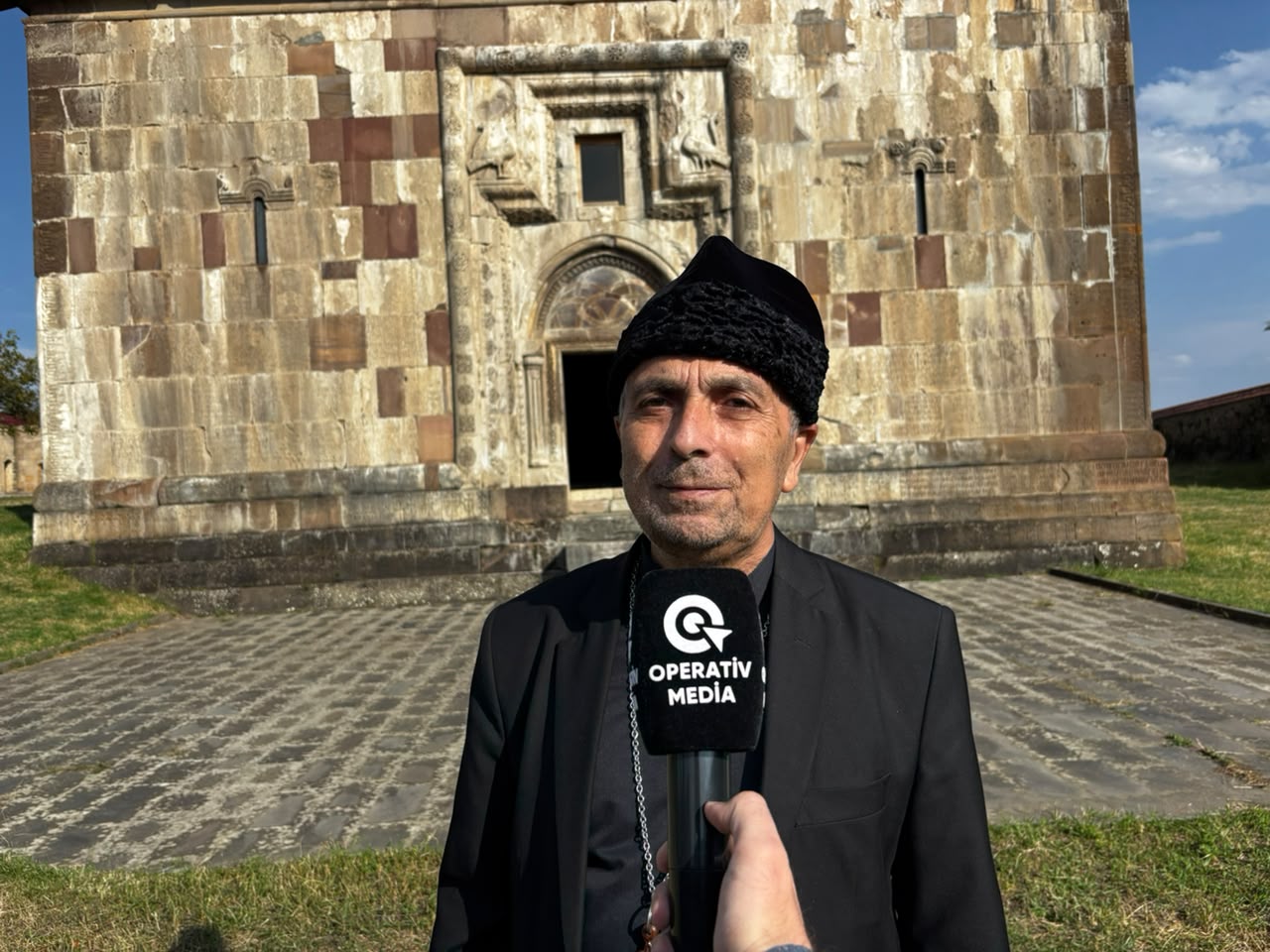
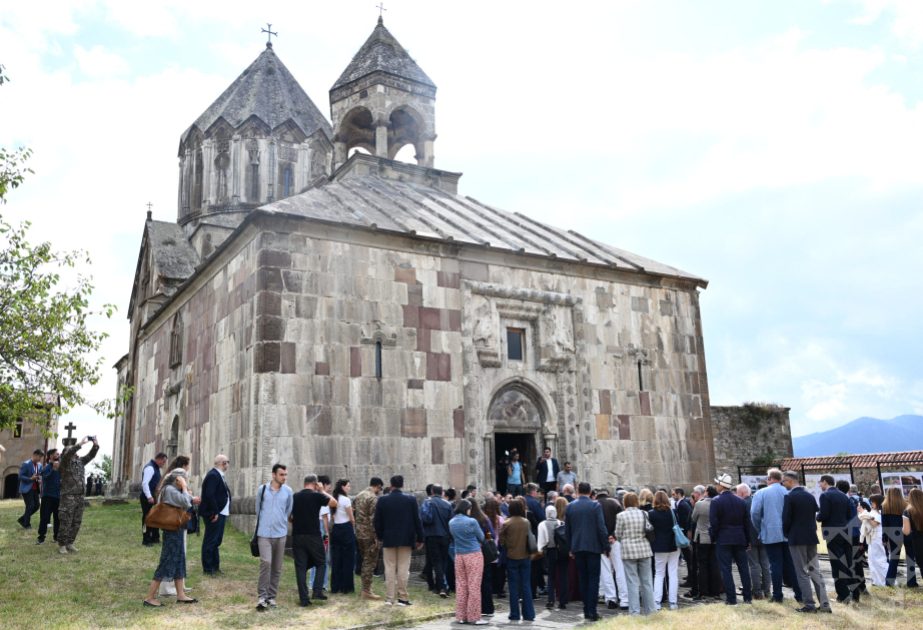
Gandzasar Monastery is one of the clearest and most beautiful examples of the ancient Albanian Church.
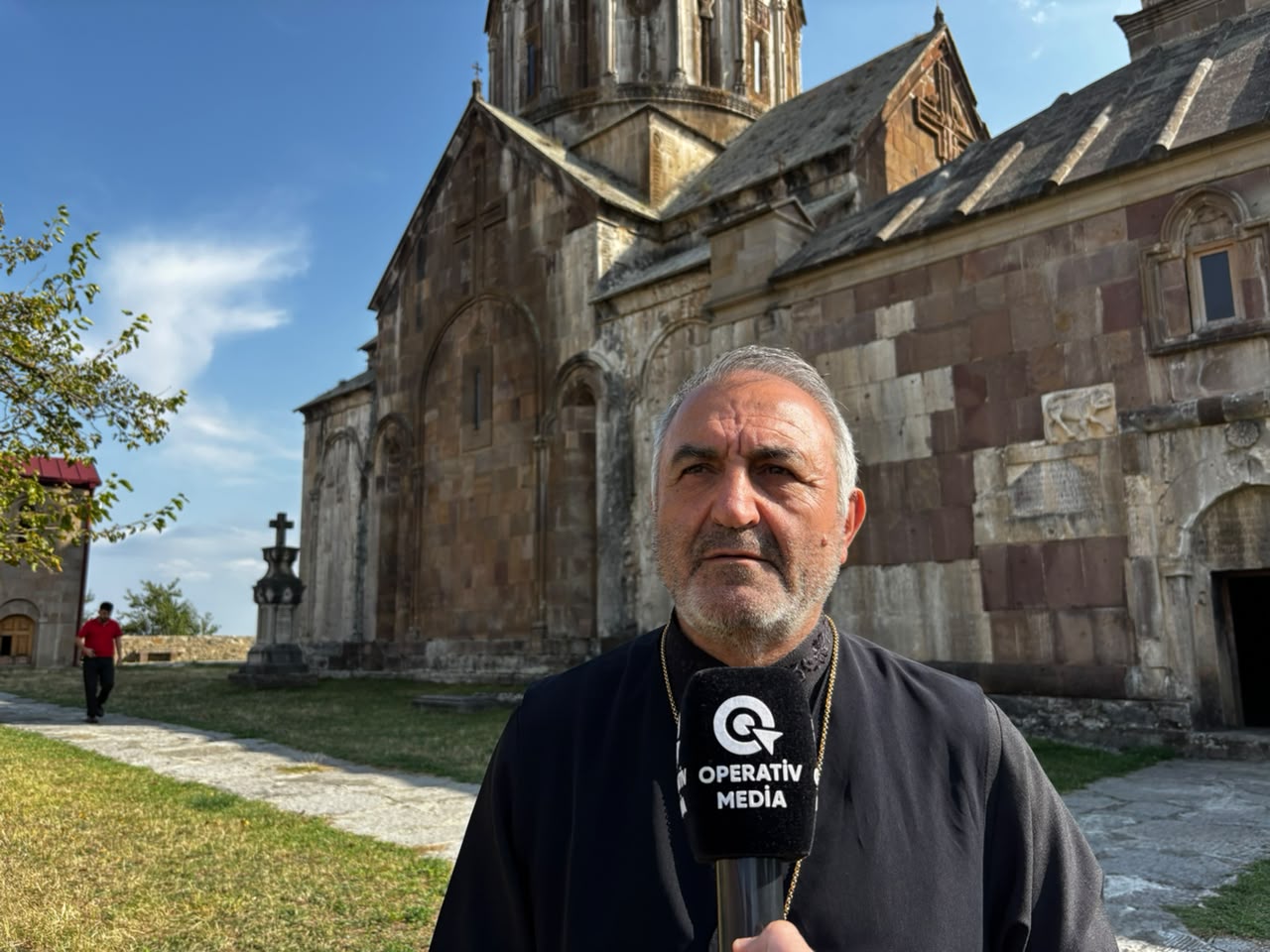
Operativ Media reports that Robert Mobili, chairman of the Albanian-Udi Christian Religious Community, said this during a media tour organized to Gandzasar Monastery.
He stated that Gandzasar Monastery was historically the patriarchal center and residence of the Albanian Church.
“After Tsarist Russia occupied the Caucasus and the Regulation on the Armenian Gregorian Church was approved by Nicholas I on March 11, 1836, these churches, cultural heritage sites, Christian monuments, and monastery complexes were placed directly under the subordination of the Armenian Church. A major blow was dealt to the Albanian Church,” Robert Mobili said.
According to him, after this, the status, literature, inscriptions, and most of the items in the churches of the Albanian Church were transferred to the Armenian Church.
“A large part was translated into Armenian, and the rest was burned or discarded. Symbols of the Armenian Gregorian Church were placed on all the churches. In particular, we see khachkars [cross-stones] brought and placed here. Meanwhile, the existing symbols of the Albanian Church were destroyed and erased,” the community chairman noted.
Robert Mobili believes that the main purpose of this process was to associate the ancient churches with the Armenian Church.
“The goal was to convey to the world that the Armenian Church is the owner of these historical churches. These churches are presented as living proof that Armenians have historically lived here. This is because the history of these churches dates back to the 4th, 5th, and 6th centuries. Linking these churches to Armenians is practically parallel to linking Armenians to Karabakh,” he emphasized.
The community chairman stated that this approach could have political consequences in the future.
“Today, this is used to revive separatist forces within the Armenian public. They claim that these are their historical places, historical lands, and historical churches, and that Azerbaijan has occupied them and the churches are being destroyed. Through this, false information about Azerbaijan is being spread to the international community,” Robert Mobili said.
He noted that, in his opinion, these churches are historical sites and the Christian heritage of the independent Albanian Church.
“These churches have no connection to the Armenian Church. Armenians began arriving here in the 18th and 19th centuries, mainly from Iran and later from Turkey. When they arrived, Islam was the dominant religion in the region, and khanates existed. Many churches were empty. The Karabakh khans created conditions for those people to worship there. Later, with the placement of Armenian Gregorian symbols in those churches, the idea began to spread that these monuments were historically Armenian churches,” the community chairman said.
Robert Mobili emphasized that the restoration and conservation of the monuments are important for properly passing down the historical heritage to future generations.
“If a building exists but has no community, it is just a building. In my opinion, it is necessary to restore and conserve these churches, and to present symbols belonging to the Albanian Church instead of the symbols altered by the Armenians. Even on the tombstones, there is a Gazakh mark. Only one or two examples of this remain here,” he said.
The community chairman noted that historical monuments such as Gandzasar and Khudavang could become important tourist destinations in the future.
“There is a great opportunity to attract tourism here in the future. Karabakh itself is a beautiful place. There are many ancient churches in Turkey. Despite being a Muslim country, those churches are beautifully restored. For example, 2,000 to 2,500 tourists visit the churches in Mardin daily. This creates opportunities for both tourism and local people. The main thing is that this is our history,” Robert Mobili said.
According to him, the main goal is to convey to the world that the Azerbaijani state is the heir to this heritage.
“The main issue is to convey globally that Azerbaijan is its heir today, and this is the direct heritage of Azerbaijan,” the community chairman emphasized.
Robert Mobili stated that if conditions are created for the Albanian-Udi community to hold services in the historical churches, it could also contribute to the development of the community's activities.
“We have our community in the Nij settlement of the Gabala district. Churches are being restored and handed over to the community, functioning as churches. Perhaps we can restore two churches here—the Khudavang monastery complex and Gandzasar—as churches and come to worship once a week. In the future, there may also be Azerbaijanis who want to join as part of the Albanian Church community,” he noted.
The community chairman emphasized the possibility for people within the Azerbaijani nation who accept Christianity to worship in their historical churches.
“Why should a person within the Azerbaijani nation who accepts Christianity go to a Protestant church? Let them return to their own church. There are such people, and the community will grow stronger. Every Azerbaijani is an heir to the Albanian Church. Today, it is simply the Udis who preserve this heritage,” Robert Mobili said.
He noted that restoring a portion of the historical churches and opening them for Christian worship could be significant from both religious and tourism perspectives.
“There are two or three such large churches in Karabakh. Let them be restored so that Christians can worship. This would create opportunities for both tourists and those who wish to visit. Many people have come to me saying they want to accept Christianity. I tell them, you are welcome, come. This is nothing to fear. Azerbaijan is a Muslim country, but it is a tolerant country,” the community chairman said.
Robert Mobili also cited Albania as an example, stating that it is possible for different religions to coexist within one society.
“Without tolerance in Azerbaijan, we could not restore these churches. Without tolerance in Azerbaijan, we could not worship here. We walk around with crosses, this is Azerbaijan. There is nothing to fear here,” he added.
The community chairman stated that the correct presentation of the Albanian Christian heritage in Azerbaijan could also have a positive impact on the country's international tourism potential.
“If every tourist who comes carries a positive impression by conveying this information, it will have a major positive impact and create a resonance for Azerbaijan,” Robert Mobili added.