Simon Stiell: Baku is a reference point for implementing reached climate agreements
A global climate finance target of $300 billion annually by 2035 has been set.
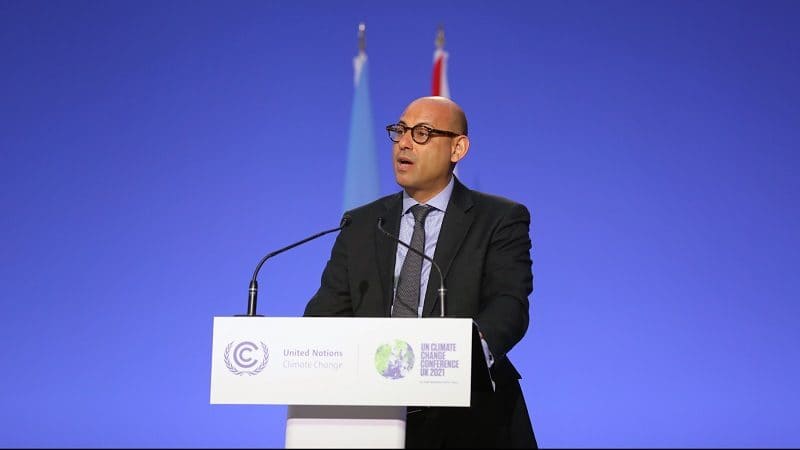
Operativ Media reports that Simon Stiell, Executive Secretary of the UN Framework Convention on Climate Change (UNFCCC), said this in a video message for Baku Climate Week.
According to him, all parties have been called upon to work together to scale up climate finance to at least $1.3 trillion annually by 2035, from both public and private sources.
Simon Stiell said that the "Baku-to-Belém Roadmap," aimed at reaching the $1.3 trillion target, has paved the way for taking practical steps in this direction and directing finance to where it is needed most.
“Returning to Baku is not just symbolic for me. Baku is a reference point for the implementation of the reached agreements. This is a test of whether promises made in negotiating rooms translate into real projects, investments, and real protection for people on the ground,” he noted.
The UN official emphasized that international cooperation on climate is already yielding results. According to him, without cooperation, humanity would be heading toward even more dangerous levels of warming.
Simon Stiell noted that investments in clean energy now exceed $2 trillion annually. He stated that renewable energy sources have surpassed coal as the main source of electricity globally, and this gap is expected to widen further in the future.
At the same time, emphasizing that climate impacts are also rapidly increasing, Stiell said that more severe heatwaves, floods, droughts, wildfires, and food security issues are being observed in various regions of the world.
“For this reason, every small increase in temperature matters,” he added.
Simon Stiell emphasized the importance of accelerating the implementation of commitments under the Paris Agreement from Baku Climate Week through to COP31 and beyond.
He stated that the main goal is to achieve results across all areas of action and to ensure that people and communities remain at the center of the climate transition.
Stiell also noted the importance of connecting governments with businesses, investors, cities, regions, and civil society, and turning reached agreements into concrete projects and investments.
According to him, this week serves to accelerate solutions, partnerships, and investments by bringing various stakeholders together.
The UN official stated that the Development and Implementation Forum plays an important role in this process. The forum aims to identify investable solutions, remove existing barriers, and accelerate real action.
Among the key priorities ahead, Simon Stiell highlighted electrification, the development of power grids and energy storage systems, zero-waste production, food security, reducing methane emissions, creating sustainable cities, and combating the impacts of climate risks on human health.
“These are not abstract topics. This is about results that people can see and feel: clean and reliable energy, lower costs, safer homes, more resilient food systems, healthier communities, and safer economies,” Simon Stiell said.
Wishing success to the participants of Baku Climate Week, he urged the world to choose results over delay.