Attacks on diplomats visiting Karabakh: Armenia is not ready for peace - ANALYSIS
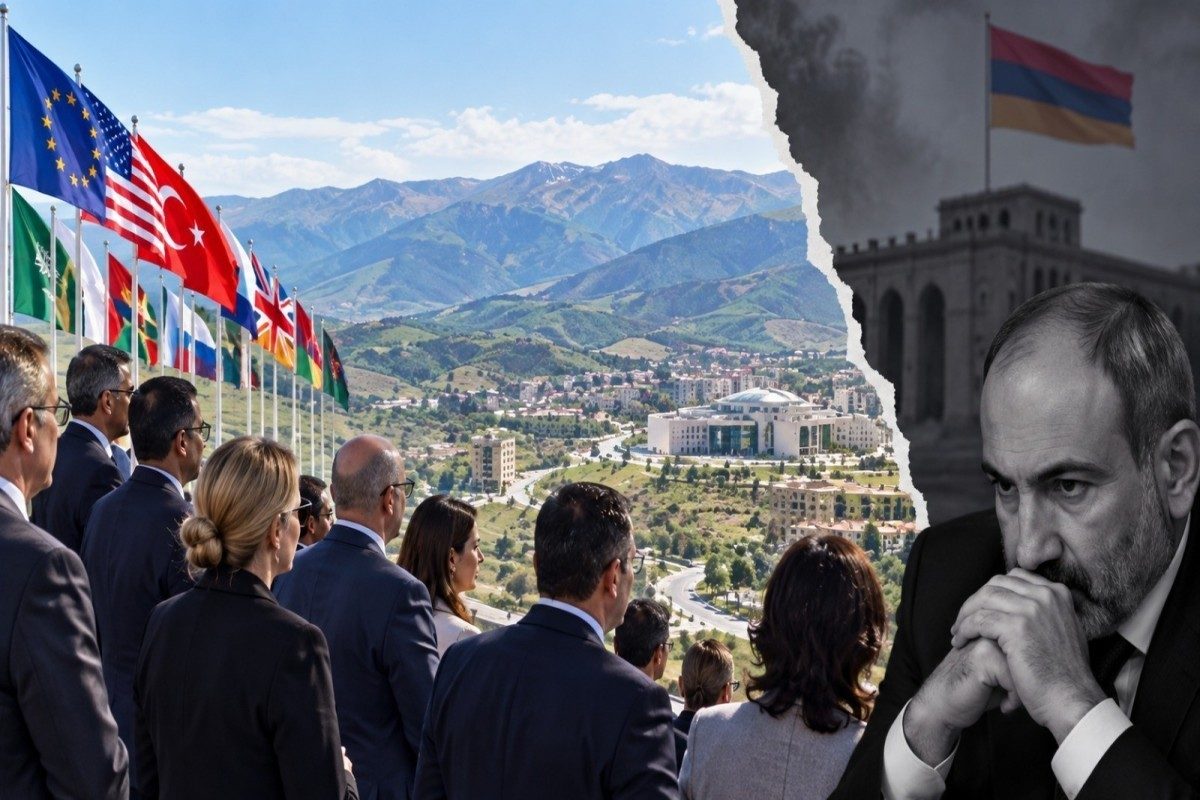
The visit of representatives of the diplomatic corps accredited in Azerbaijan to Karabakh and East Zangezur has been met with a harsh reaction from political circles, public activists and the media in Armenia.
However, Karabakh is Azerbaijan’s internationally recognized sovereign territory, and any visits to these territories and the organization of international events there are the exclusive right of Baku. The fact that such visits have once again become the subject of political attacks, even as Armenia declares that it recognizes Azerbaijan’s territorial integrity, indicates that a contradiction remains between Yerevan’s peace rhetoric and domestic attitudes. In particular, the fact that the reactions have reached the political level shows that the Karabakh issue has still not disappeared from Armenia’s domestic political discourse.
These developments provide grounds for concluding that Armenian society, as well as the ruling circles, cannot free themselves from revanchist sentiments. No matter how much Armenia verbally declares itself to be in favor of peace, we observe the opposite in practice. Armenia is not ready for peace, and the authorities’ statements about peace are nothing more than a smokescreen. On this issue, the ruling team led by Prime Minister Nikol Pashinyan is not much different from revanchist groups. The reactions to the diplomatic corps’ visit provide grounds for saying that the Armenian authorities are directly behind the campaign of attacks in Armenia and are inflaming emotions.
Fuad Abdullayev, a senior adviser at the Center for Analysis of International Relations and Multiculturalism, told that it would be incorrect to assess the reaction in Armenia to the diplomatic corps’ visit to Karabakh as merely emotional dissatisfaction.
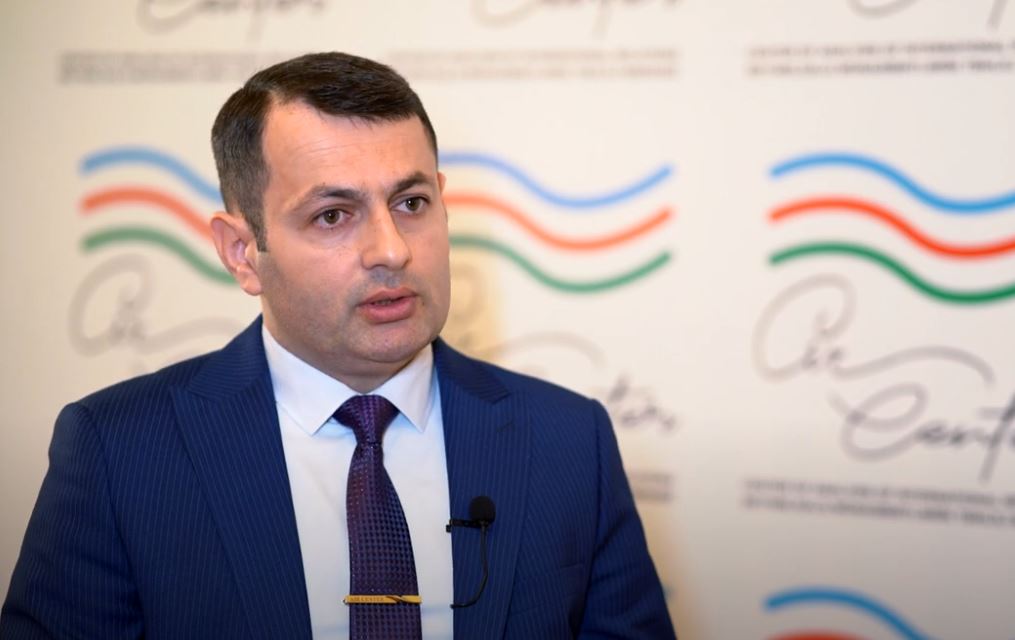
According to him, the fact that the reaction encompasses political circles as well as the public and information environment indicates that the issue has deeper causes. The expert believes that the fact that a diplomatic visit organized to Azerbaijan’s sovereign territory has been met with protests at this level demonstrates that old political approaches regarding Karabakh have still not been completely eliminated in Armenian society.
“The visit of representatives of the foreign diplomatic corps accredited in the Republic of Azerbaijan to the territories liberated from occupation has been met with a disproportionately harsh and legally unfounded reaction from the Armenian public and political establishment. This reaction, which has turned into outright information hysteria, requires detailed expert analysis. This is because we are dealing not merely with an emotional reaction, but with a symptom of deeper structural problems existing in Armenian society and state policy,” the expert emphasized.
Fuad Abdullayev believes that the issue should be approached primarily from the perspective of international law and the principles of state sovereignty:
“Karabakh is an integral and internationally recognized part of Azerbaijan’s sovereign territory. From a legal standpoint, a sovereign state has the exclusive right to exercise full jurisdiction within its state borders. This inalienable right also includes the state’s complete freedom to determine whom to invite to its territory, when and under what conditions. When it comes to foreign diplomats, representatives of international organizations, journalists or tourists, their presence in Karabakh is solely a matter of bilateral relations between Baku and the states that send them.”
Against the backdrop of statements by Armenia’s leadership recognizing Azerbaijan’s territorial integrity, the continuation of protests against Azerbaijan’s sovereign activities in Karabakh reveals a discrepancy between political statements and socio-political discourse in the peace process. Recognition of territorial integrity also entails acceptance of the other state’s sovereign jurisdiction over those territories.
According to F. Abdullayev, visits by the diplomatic corps are also of great importance in terms of enabling foreign representatives to familiarize themselves directly with the situation in the region:
“Foreign diplomats have the opportunity to see two important aspects with their own eyes, rather than through the prism of Armenian lobbying and propaganda: first, the apocalyptic scale of the destruction left behind by the Armenian occupation — cities razed to the ground, mined areas and heritage sites wiped off the face of the earth; and second, the pace of the large-scale reconstruction work carried out by Azerbaijan to restore infrastructure, return internally displaced persons and reintegrate the region...”
According to the expert, the reactions surrounding the visit in Armenia should also be assessed as an indication of a broader political problem — the existence of revanchist approaches.
“The latest hysteria surrounding the diplomats’ visit to Karabakh is a direct indication that the destructive idea of territorial expansion — the concept known as ‘Miatsum’ — is still alive. Despite the capitulation in 2020 and the full restoration of Azerbaijan’s sovereignty in 2023, a significant part of Armenia’s political spectrum refuses to accept the new geopolitical realities,” F. Abdullayev said.
In this context, the issue is not limited solely to attitudes toward the diplomats’ specific visit. The main question is the extent to which Armenia’s statements about peace and mutual recognition of territorial integrity find practical expression both in the country’s political circles and in society. In this sense, abandoning the logic of the past conflict and approaches reminiscent of territorial claims is one of the important conditions for sustainable peace.
Fuad Abdullayev unequivocally noted that the Armenian side has no legal grounds to object to the movement of foreign representatives within Azerbaijan’s sovereign territory:
“It is absurd for the Armenian public or Armenia’s state institutions to express dissatisfaction, protest or attempt to dictate conditions regarding the movement of foreign missions within Azerbaijan’s sovereign territory. Bringing and accompanying any person to its sovereign lands is solely the business of the sovereign state.”
According to the expert, as long as revanchist approaches are not eliminated within Armenia, progress in the peace process solely at the level of political statements will not be sufficient.
“Karabakh is Azerbaijan’s sovereign territory, and the movement of any persons, including diplomats, within this territory falls under the exclusive authority of official Baku and cannot be a subject of discussion with third parties. Sustainable peace in the region will not be possible until ideological revanchism is eliminated in Armenia and the government puts an end to political games and moves from statements to real steps toward signing a peace agreement,” Fuad Abdullayev concluded.
APA